Building a quieter bridge between a request and a result
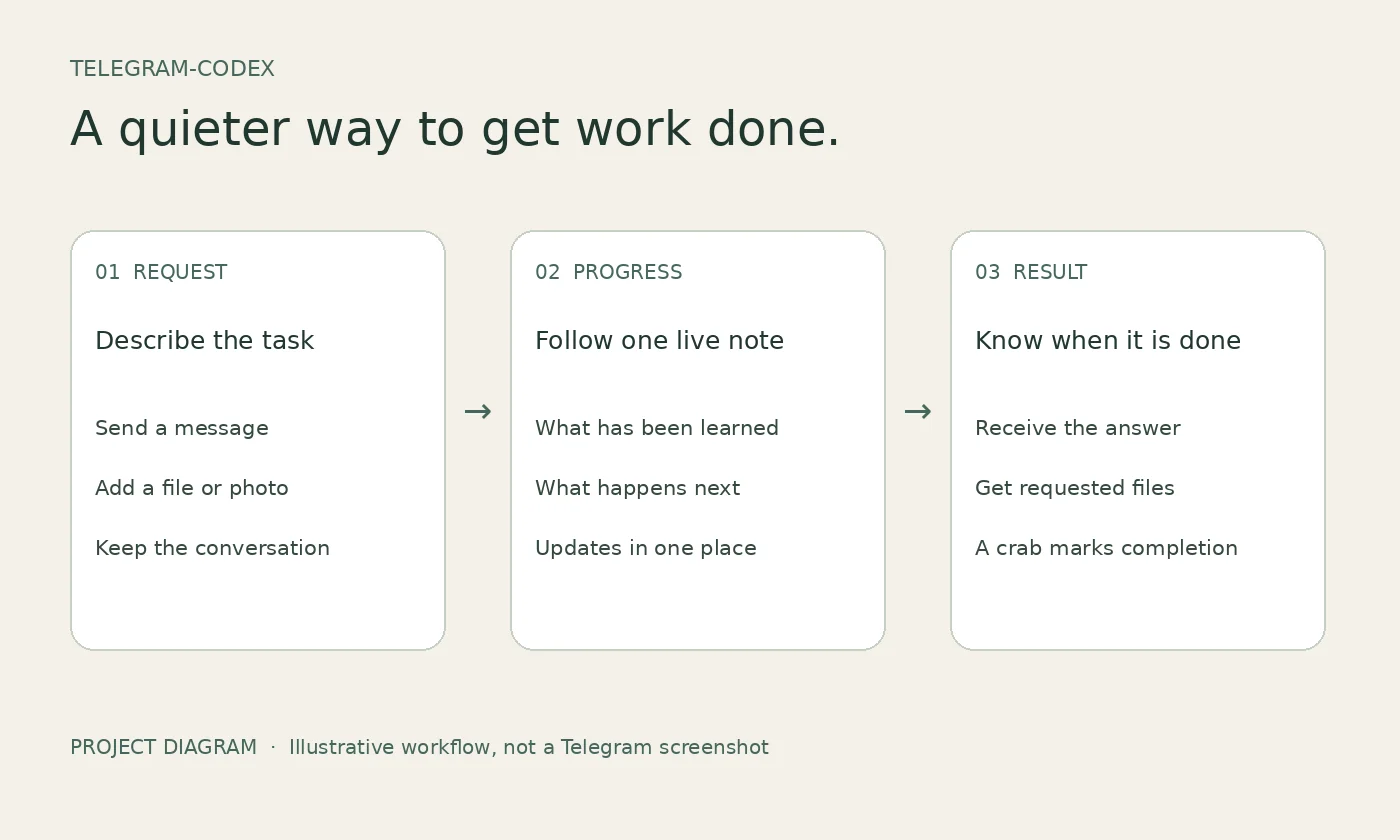
A good assistant interface should make it easy to ask for work, understand what is happening, and recognize when the result is ready. Telegram-Codex is becoming a project in its own right: a conversational front door to ongoing development, with Project Studio as its public journal. The first improvements focused on everyday friction. Replies now have readable emphasis, code and links. Files and photos can accompany a request, and requested artifacts can come back as document attachments. Conversations can be resumed so a project does not have to begin from scratch each time. Progress needed a different rhythm. Earlier updates listed commands and execution details. The new approach uses one message that changes in place, summarizing what has been learned and what comes next. The final answer stays separate, with a crab emoji as its completion signal. Requested files arrive before that final marker. This is public progress prose, not a display of private internal reasoning. Detailed development evidence stays separate from the brief conversation update. If an update cannot be edited, work and final delivery continue without spawning replacement-message noise. The bridge and integrated publishing tools now have a private, version-controlled development home. Source and tests are preserved there; personal conversations, uploaded files and private operational records are outside the source repository. Evidence and limits: the latest editable-progress change passed all 84 automated tests. These include mocked message delivery and edit failures, formatting and file-transfer behavior. They do not establish complete live-client acceptance. Real Telegram confirmation of the editable progress experience remains pending, and received audio is a file rather than automatic transcription. The workflow illustration is explanatory project artwork, not a screenshot of a live conversation. Next comes ordinary use: check that progress remains useful without becoming distracting, confirm file transfers in both directions, and let concrete feedback shape the next small improvement.
Next: Confirm the editable progress experience in everyday use and refine attachment handling from real feedback.