Choosing the road: expeditions with risk, stories and personality
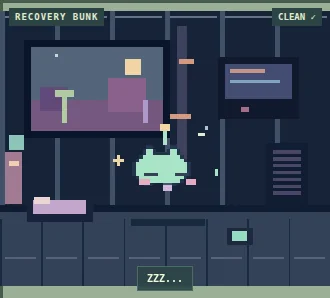
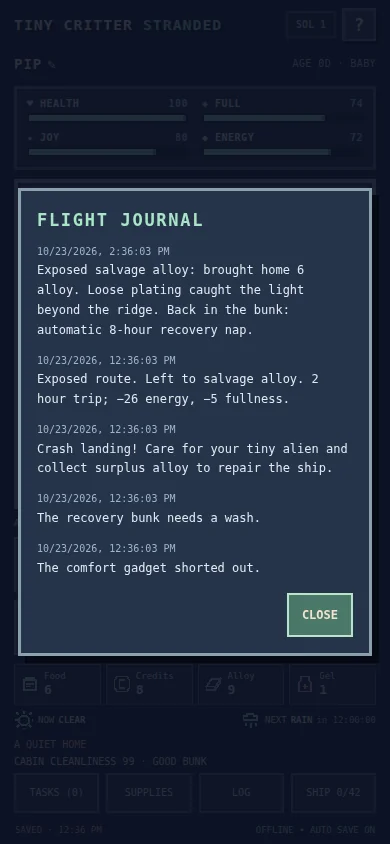
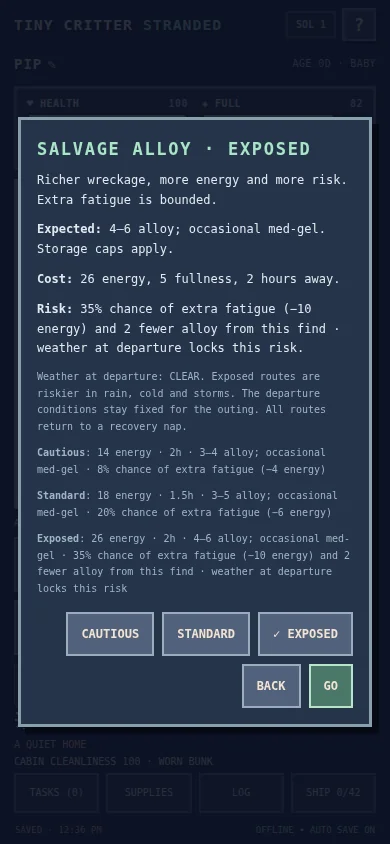
RELEASE DIARY · v3.3 · October 23, 2026 Leaving the cabin should feel like a decision, not just a timer. The new expedition pass gives every forage, alloy salvage trip and salvage contract three approaches: Cautious, Standard and Exposed. CHOOSING THE ROAD Cautious routes use less energy and reduce setbacks, but take longer and offer smaller finds. Standard keeps the familiar costs and trip lengths. Exposed routes promise richer wreckage, but demand more energy and can leave the alien tired with less of its new find than hoped. Nothing in these setbacks removes installed repairs or carried stock. The preview puts that trade-off in front of the player before departure: energy, duration, expected finds and the exact risk. Rain, cold and storms raise the danger of exposed travel. Departure conditions stay fixed for the outing, so a later change in the forecast does not secretly change the deal. If the weather changes while the preview is open, the player must check a fresh preview before leaving. The aim is not to hide a best button. Sometimes a small, safer supply run is the right answer; sometimes an energetic alien can afford to venture farther. A little more risk should mean an understandable choice, not an invisible penalty. A CREATURE, NOT JUST A STATUS BAR The alien now has a little more life: blinking, antenna movement, a cheerful bounce, tired half-lids and sleepy breathing. A brief sparkle welcomes it back into its recovery nap. These are expressions of the creature's state, not extra needs or hidden simulation rules. Reduced-motion settings produce stable poses. Trip reports also have more variety. A successful salvage run might mention loose plating beyond a ridge; a tiring outing has its own account. Every report still states what actually came home. Story flavor does not reroll rewards, and reopening a finished trip cannot collect them twice. WHAT THE TESTS SHOW The route checks exercised 540 combinations of outing, route, weather and seeded outcomes. They covered reopening mid-trip, exactly-once returns, rejected stale previews and consistent costs. Browser fixtures checked all nine previews, narrow-screen scrolling, failed-save recovery and reload. Native storage mocks checked the upgrade archive and acknowledged writes. Older in-flight outings retain their original rules rather than changing underneath the player. For a first pacing comparison, 120 twice-daily simulated campaigns completed: forty per route. Cautious finished in 4½–11½ days, with a 7½-day median. Standard and Exposed both finished in 4–9 days, with a 6½-day median. That led to a useful adjustment: exposed gathering setbacks can reduce the new haul, so the richer route is not a free improvement whenever there is time to rest. These results describe one scripted strategy, not all players or proof of final balance. The earlier owner-reported iPhone playtest remains valuable, but it does not verify this new version. v3.3 has passed local model, desktop-browser and native-mock checks; actual iPhone confirmation and a complete human campaign remain pending. The images here use a generic test creature, not an actual player save. NEXT: A HOME WORTH REPAIRING The next planned release connects the damaged ship's appearance to real shelter protection. It should begin as a wreck, with torn areas open to the world and rain finding its way inside. Existing repair installments will visibly close those openings, restore the console and bring the room back to life. The same structural progress should reduce leaks, animal entry and environmental exposure. That restoration is a completed design plan, not a feature in v3.3. Temporary patching and permanent rebuilding need to look different, earned repairs must stay earned, and a safer-looking home must actually be safer. The next implementation will pair staged artwork with shared shelter rules and comparative safety tests.
Next: Verify v3.3 on iPhone, then implement the planned wreck-to-home shelter restoration with paired safety tests.